


Ligament Injury Treatment in East London, Essex – Specialist Orthopaedic Care with Mr Nurul Ahad
If you’ve experienced a ligament injury, prompt and expert care is essential to restore joint stability and prevent long-term complications. Mr Nurul Ahad, Consultant Orthopaedic Surgeon, provides comprehensive diagnosis and treatment for ligament injuries in East London, Essex, and surrounding areas, helping patients recover safely and effectively.
Ligament injuries—ranging from mild sprains to complete tears—commonly affect joints such as the knee, ankle, wrist, and shoulder. These injuries often occur during sports, physical activity, or accidents, and can lead to pain, swelling, and joint instability if not properly managed.
- Spire Hartswood Hospital:
Private Patients
- Practice Plus Group Hospital:
Private Patients
- Request an Appointment
Patients in East London and Essex benefit from:
- Expert clinical assessment and accurate diagnosis
- Access to advanced imaging including MRI when required
- Personalised treatment plans based on injury severity
- Non-surgical and surgical treatment options
- Structured rehabilitation programmes for full recovery
Early specialist care can significantly improve healing outcomes and reduce the risk of re-injury.
What are Ligament Injuries?
Ligaments are tough, fibrous bands of connective tissue that connect one bone to another bone, providing stability and support to joints. Ligament injuries refer to a stretching or, in more serious cases, a tearing of ligaments.
What are the Types of Ligament Injuries?
Ligament injuries are usually classified into three grades:
- Grade I: Mild stretch, no major tear
- Grade II: Partial tear
- Grade III: Complete tear with joint instability
What are the Causes of Ligament Injuries?
Ligament injuries occur when a joint is pushed beyond its normal range of motion. Common causes include:
- Sudden twisting or pivoting movements, especially during sports.
- Direct impact or trauma to a joint, such as a fall or collision.
- Overstretching from abrupt stops, turns, or improper landing.
- Repetitive stress from overuse activities.
- Weak muscles or poor conditioning, which reduce joint support.
- Previous ligament injuries, making the joint more prone to re-injury.
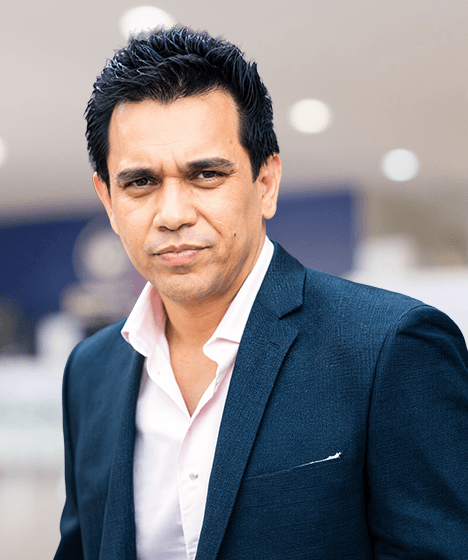
Mr Nurul Ahad
Consultant Orthopaedic Surgeon in East London & Essex
Mr Nurul Ahad provides specialist care for hip, knee, hand, wrist, foot & ankle conditions, including arthritis, sports injuries, joint pain & selected trauma-related concerns.
These factors can lead to stretching, partial tears, or complete ligament ruptures.
What are the Signs and Symptoms of Ligament Injuries?
Ligament injuries typically present with:
- Pain at the affected joint, especially with movement
- Swelling and inflammation soon after the injury
- Bruising or discolouration around the area
- Tenderness when touched
- Instability or “giving way” of the joint
- Reduced range of motion
- A popping sound or sensation at the moment of injury (common in ACL tears)
These symptoms can range from mild to severe depending on the extent of the ligament damage.
What are the Common Sites of Ligament Injuries?
Ligament injuries can occur in any joint, but the most commonly affected sites include:
- Knee – ACL, PCL, MCL, LCL injuries
- Wrist – scapholunate ligament tear
- Shoulder – AC joint ligament sprain
- Ankle – lateral ligament sprain
How are Ligament Injuries Diagnosed?
Ligament injuries are diagnosed using a combination of clinical examination and imaging tests. Doctors begin by taking a history of how the injury happened, followed by a physical examination to check for swelling, tenderness, joint stability, and range of motion. Special tests (like the Lachman test for ACL) help identify specific ligament damage. Imaging may be used to confirm the diagnosis - X-rays rule out fractures, MRI provides the best view of ligament tears, and ultrasound can assess some superficial ligaments.
What Does Treatment for Ligament Injuries Involve?
Treatment for ligament injuries focuses on reducing pain, restoring stability, and helping the joint heal properly. Treatment typically includes rest, ice, compression, and elevation (RICE) in the early phase to control swelling and discomfort, along with pain-relievers or anti-inflammatory medications. Mild to moderate injuries are managed with bracing and physiotherapy to rebuild strength and mobility. More severe ligament tears (Grade III) may require immobilisation or surgical repair/reconstruction, followed by a structured rehabilitation program to restore full function.
Why Choose Mr Nurul Ahad for Ligament Injury Treatment in East London & Essex?
When it comes to ligament injuries, choosing an experienced orthopaedic consultant ensures the best possible recovery. Mr Nurul Ahad is highly skilled in managing both simple and complex ligament conditions using evidence-based techniques.
Why patients choose Mr Ahad:
- Extensive experience treating ligament injuries of the knee, ankle, wrist, and shoulder
- Expertise in both non-surgical management and surgical reconstruction
- Accurate diagnosis using clinical assessment and advanced imaging
- Tailored rehabilitation plans to restore strength and stability
- Focus on long-term recovery and injury prevention
- Trusted orthopaedic care across East London, Essex, and nearby areas
Mr Ahad’s approach is centred on helping patients regain confidence in movement and return to their normal activities as quickly and safely as possible.
FAQs – Ligament Injury Treatment in East London & Essex
What is a ligament injury?
A ligament injury involves stretching or tearing of the connective tissue that stabilises joints.
How do I know the severity of my ligament injury?
Severity is classified into Grade I (mild), Grade II (partial tear), and Grade III (complete tear). A specialist assessment is required for accurate diagnosis.
Do all ligament injuries require surgery?
No, many mild to moderate injuries can be treated with rest, bracing, and physiotherapy. Surgery is usually reserved for severe tears.
How long does recovery take?
Recovery varies depending on severity—mild injuries may heal in weeks, while severe tears can take several months.
What imaging tests are used?
MRI scans are commonly used to confirm ligament tears, while X-rays help rule out fractures.
Can ligament injuries heal completely?
Yes, with proper treatment and rehabilitation, many patients regain full function and stability.
Book Your Ligament Injury Consultation in East London, Essex
If you are dealing with joint pain, swelling, or instability, expert help is available. Mr Nurul Ahad, Consultant Orthopaedic Surgeon, offers specialised ligament injury treatment in East London, Essex, and surrounding areas.
Start your recovery journey today.
Book a consultation to receive an accurate diagnosis and a personalised treatment plan tailored to your needs.
Restore stability. Rebuild strength. Return to activity with confidence.