


Ankle Fusion Surgery in East London, Essex – Advanced Arthritis Relief with Mr Nurul Ahad
If chronic ankle pain and stiffness limit your mobility, ankle fusion surgery (ankle arthrodesis) may provide long-term relief. Mr Nurul Ahad, Consultant Orthopaedic Surgeon, offers expert care for patients requiring ankle fusion in East London, Essex, and surrounding areas.
Ankle arthritis can make everyday activities such as walking or standing extremely painful. When non-surgical treatments like medication, injections, or physiotherapy no longer provide relief, ankle fusion surgery is a proven solution to eliminate pain by stabilising the joint.
- Spire Hartswood Hospital:
Private Patients
- Practice Plus Group Hospital:
Private Patients
- Request an Appointment
Patients across East London and Essex benefit from:
- Specialist assessment of ankle arthritis and joint damage
- Access to advanced imaging and precise diagnosis
- Personalised surgical and non-surgical treatment plans
- Expertise in both open and minimally invasive fusion techniques
- Comprehensive aftercare and rehabilitation support
Early consultation with a specialist can help you regain comfort, improve mobility, and prevent further joint deterioration.
What is Ankle Fusion?
Ankle fusion, also known as ankle arthrodesis, is a surgical procedure commonly employed for the treatment of ankle arthritis in which the joint cartilage is severely damaged. The procedure involves fusion of the bones that form the ankle joint into one piece, which eliminates joint motion and relieves pain originating from the arthritic joint.
Arthritis is the inflammation of a joint as a result of degeneration of the smooth cartilage that lines the ends of the bones within. This degeneration of cartilage causes painful rubbing of the bones, leading to swelling, joint stiffness, and restricted movement.
Anatomy of the Ankle
The ankle joint connects the leg to the foot and comprises three bones: the tibia, fibula, and talus. The tibia (shinbone) and fibula (calf bone) are the bones of the lower leg that articulate with the talus (ankle bone), enabling up-and-down movement of the foot. The joint surfaces of all these bones are lined by a thin, tough, flexible, and slippery surface called the articular cartilage, which acts as a shock absorber to cushion and reduce friction between the bones. The cartilage is lubricated by synovial fluid, which further enables smooth movement of the bones. Ligaments are tough, rope-like bands that connect bones to other bones, holding them in place to provide joint stability.
Indications for Ankle Fusion
Ankle fusion surgery is recommended when conservative treatment measures such as medications and injections have failed to relieve the arthritic symptoms. You may be a suitable candidate for ankle fusion if you exhibit the following:
- Osteoarthritis
- Rheumatoid arthritis
- Pseudoarthrosis
- Avascular necrosis
- Posttraumatic arthritis
- Ankle fracture with severe cartilage damage
- Failed total ankle arthroplasty
- Revision of failed total ankle arthroplasty
Preparation for Ankle Fusion
In general, preoperative preparation for ankle fusion surgery will involve the following steps:
- A thorough examination is performed by your doctor to check for any medical issues that need to be addressed prior to surgery.
- Depending on your medical history, social history, and age, you may need to undergo tests such as bloodwork and imaging to screen for any abnormalities that could threaten the safety of the procedure.
- You will be asked if you have allergies to medications, anaesthesia, or latex.
- You should inform your doctor of any medications, vitamins, or supplements that you are taking.
- You should refrain from supplements or medications such as blood thinners, aspirin, or anti-inflammatory medicines for 1 to 2 weeks prior to surgery.
- You should refrain from alcohol or tobacco at least a week before surgery.
- You should not consume solids or liquids at least 8 hours prior to surgery.
- Arrange for someone to drive you home after surgery.
- A written consent will be requested from you after the surgical procedure has been explained in detail.
Procedure for Ankle Fusion
Ankle fusion surgery may be performed as an open surgery, where a large incision is made, or as a minimally invasive arthroscopic surgery, where small incisions are made to insert an arthroscope (a thin tube with a camera and light source) and miniature surgical tools. Open surgery is the commonly employed approach and involves the following steps:
- You will lie on your back on the operating table under regional or general anaesthesia.
- An incision is made from either the anterior (front) aspect, or lateral (side) aspect of the ankle.
- The underlying muscles are carefully separated to expose the ankle joint area.
- Your surgeon removes any remaining cartilage from the affected joint and prepares the joint surface for fusion.
- The joints are then fused together with the help of screws, wires, plates, or rods.
- Bone grafting may be performed in cases of substantial bone loss. This is done using a graft taken from another part of your body (autograft) or from donor tissue (allograft).
- Your surgeon will also perform any other required repairs in the treatment area.
- Finally, the overlying soft tissue and skin are closed with sutures and sterile bandages are applied.
Postoperative Care and Recovery
In general, postoperative care instructions and recovery after ankle fusion surgery will involve the following steps:
- You will be transferred to the recovery area where your nurse will closely observe you for any allergic/anaesthetic reactions and monitor your vital signs as you recover.
- You may notice some pain, swelling, and discomfort in the ankle area. Pain and anti-inflammatory medications are provided as needed.
- Antibiotics are also prescribed to address the risk of surgery-related infection.
- Ice packs covered with a towel can be applied to the affected area for about 15-20 minutes to reduce postoperative pain and swelling.
- Do not bear weight on the operated leg. A walking boot or non-weight-bearing cast is recommended for a few weeks to facilitate healing and support the foot.
- Assistive devices such as crutches and walkers are recommended for several weeks to maintain balance and stability while walking.
- At least 6 to 8 weeks may be required for your ankle bones to fuse sufficiently to start weight-bearing on the operated leg.
- Keep the foot elevated at or above the level of your heart to help minimize swelling and discomfort.
- Start rehabilitation (physical therapy) as recommended by your surgeon to improve range of motion. You should begin appropriate exercises to stretch and strengthen the foot muscles.
- Keep the surgical site clean and dry. Instructions on surgical site care and bathing will be provided.
- Recovery from ankle fusion usually takes about 4 to 6 months. Refrain from strenuous activities and lifting heavy weights during this period.
- You can return to sports once the foot has regained its normal strength and function, and with your surgeon's approval.
- A periodic follow-up appointment will be scheduled to monitor your progress.
Risks and Complications
Ankle fusion surgery is a relatively safe procedure; however, as with any surgery, some risks and complications may occur, such as the following:
- Infection
- Bleeding
- Damage to nerves and vessels
- Thromboembolism or blood clots
- Anaesthetic/allergic reactions
- Non-union of bones
- Hardware failure
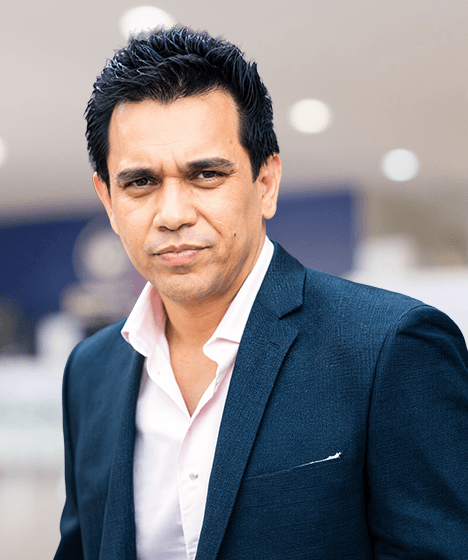
Mr Nurul Ahad
Consultant Orthopaedic Surgeon in East London & Essex
Mr Nurul Ahad provides specialist care for hip, knee, hand, wrist, foot & ankle conditions, including arthritis, sports injuries, joint pain & selected trauma-related concerns.
Why Choose Mr Nurul Ahad for Ankle Fusion in East London & Essex?
Selecting the right orthopaedic surgeon is key to achieving the best possible outcome from ankle fusion surgery. Mr Nurul Ahad is a highly experienced Consultant Orthopaedic Surgeon specialising in foot and ankle conditions.
Why do patients choose Mr Ahad:
- Extensive experience in treating ankle arthritis and complex joint conditions
- Expertise in ankle fusion (arthrodesis) procedures, including advanced surgical techniques
- Focus on reducing pain and improving long-term function
- Individualised care tailored to each patient’s needs and lifestyle
- Strong emphasis on safe recovery and rehabilitation
- Convenient access for patients in East London, Essex, and nearby communities
Mr Ahad is committed to helping patients return to a more comfortable, active life with reduced pain and improved stability.
FAQs – Ankle Fusion Surgery in East London & Essex
What is ankle fusion surgery?
Ankle fusion is a procedure that joins the bones of the ankle joint together to eliminate painful movement caused by arthritis.
Who is a candidate for ankle fusion?
Patients with severe ankle arthritis, joint damage, or those who have not responded to conservative treatments may be suitable candidates.
How long does recovery take after ankle fusion?
Recovery typically takes 4 to 6 months, although full healing and return to normal activities may take longer.
Will I be able to walk normally after ankle fusion?
Yes, most patients can walk comfortably after recovery, although ankle motion is reduced. Other joints compensate to allow functional movement.
Is ankle fusion better than ankle replacement?
It depends on individual factors such as age, activity level, and severity of arthritis. Your surgeon will recommend the most suitable option.
What are the risks of ankle fusion surgery?
Potential risks include infection, blood clots, nerve injury, and delayed bone healing, though these are carefully managed.
Book Your Ankle Fusion Consultation in East London, Essex
If ankle arthritis is affecting your quality of life, expert care is available close to home. Mr Nurul Ahad, Consultant Orthopaedic Surgeon, provides specialised ankle fusion surgery in East London, Essex, and surrounding areas.
Take the next step towards lasting pain relief.
Contact the clinic today to schedule your consultation and explore your treatment options.
Reduce pain. Improve stability. Move with confidence again.